Mid-Century Modern Style: Key Features, Colors, Materials
What is the mid-century modern style?
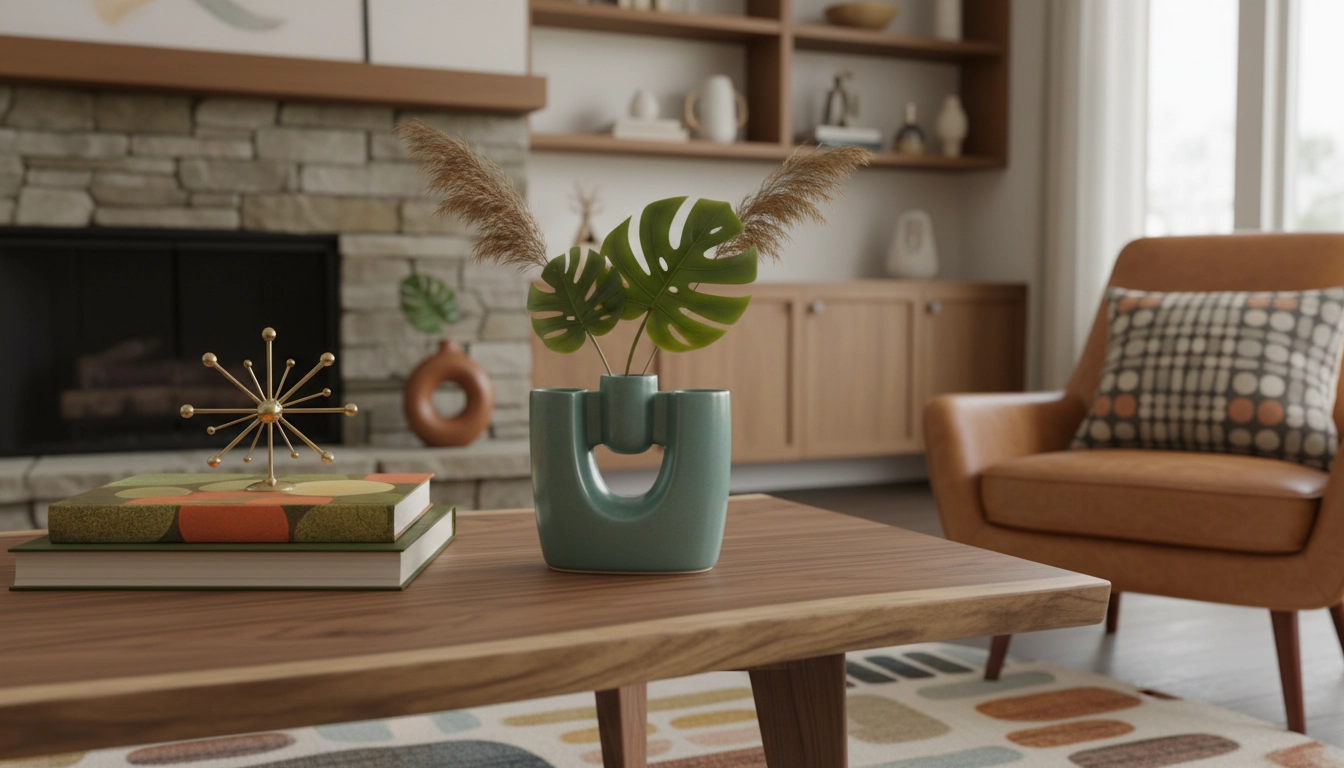
Mid-century modern is a design style that rose to prominence from roughly the mid-1940s through the late 1960s, defined by clean lines, practical forms, and an emphasis on honest materials. It balances a warm, lived-in feel with a streamlined look—never overly ornate, but rarely cold or stark.
Furniture silhouettes are typically simple and geometric, often sitting on tapered legs that make pieces feel lighter and more “floated” off the floor. You’ll see flat or gently rounded edges, slim frames, and well-proportioned shapes that prioritize comfort and usability. Common materials include walnut, teak, oak, and molded wood, paired with metal accents, leather, or textured upholstery.
Color and pattern play a supporting role: think earthy neutrals (wood tones, creams, grays) punctuated by confident accents like mustard, olive, teal, rust, or burnt orange. Patterns tend to be graphic and playful—atomic motifs, stripes, or subtle geometrics—used selectively to keep the overall look calm and cohesive.
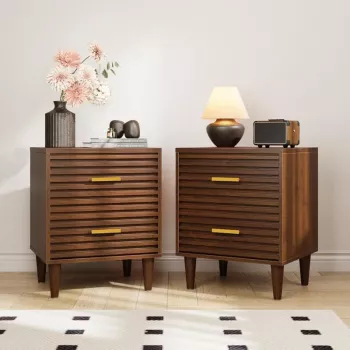
In a bedroom, mid-century modern often shows up through low-profile bed frames, streamlined dressers, and nightstands that combine form and function. A classic example is a nightstand with drawers: minimal hardware, tidy storage, and a silhouette that looks intentional rather than bulky. For ideas on choosing pieces that fit the look—especially bedside storage—see this guide to mid-century modern nightstands with drawers.
For Mid-Century Modern Style: Key Features, Colors, Materials, the best answer depends on fit, material, care instructions, and how the product will be used day to day.
Checking those details first helps avoid a poor match and keeps the choice practical after delivery.
For Mid-Century Modern Style: Key Features, Colors, Materials, the best answer depends on fit, material, care instructions, and how the product will be used day to day.
FAQ
What colors go with mid-century modern?
Warm wood tones pair well with neutrals like cream, white, and gray, then add accents such as mustard, teal, olive, or rust. Keep the palette intentional by repeating an accent color in a few places rather than using many competing hues.








Leave a comment