30-Setting Conical Burr Grinder With LCD Timer: Dial In
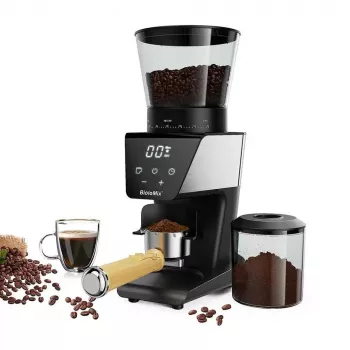
Automatic Conical Burr Coffee Grinder with 30 Settings and LCD Timer
Consistent grind size is one of the biggest upgrades for better-tasting coffee. A conical burr grinder with multiple settings and a timer helps dial in everything from espresso to French press while keeping daily brewing fast and repeatable. If you’re ready to move beyond pre-ground coffee (or a blade grinder), an automatic burr grinder can make your cups taste cleaner, more balanced, and easier to reproduce every morning.
What makes a conical burr grinder different
Unlike blade grinders that chop beans inconsistently, burr grinders crush coffee between two precisely shaped surfaces. That difference shows up in the cup: burrs create a more uniform particle size, which helps extraction stay balanced and can reduce harsh bitterness or sharp sourness.
Conical burrs are a popular choice for home brewing because they cover a wide grind range—fine enough for espresso and coarse enough for French press—while staying straightforward to adjust. With more uniform grounds, pour-over can taste clearer and sweeter, and espresso shot timing can become more predictable.
For general brewing guidance and fundamentals, you can also reference the National Coffee Association’s brewing basics and educational resources from the Specialty Coffee Association.
Who this grinder suits best
A 30-setting conical burr grinder with a timer tends to fit a lot of kitchens, but it’s especially helpful for a few types of coffee drinkers:
- Espresso and milk-drink fans who need fine adjustments and repeatable timing to keep shots consistent.
- Pour-over, drip, and AeroPress brewers who want a reliable “set it and forget it” workflow once dialed in.
- Households sharing one grinder across multiple brew methods where fast switching between settings matters.
- Anyone replacing pre-ground coffee to get fresher aroma and better control over strength and flavor.
If you’re shopping for a grinder that’s ready to handle multiple brew styles, the Automatic Conical Burr Coffee Grinder with 30 Settings and LCD Timer is an easy place to start when you want both range and repeatability.
30 grind settings: practical ways to use them
Multiple grind settings matter because different brew methods need different particle sizes. A practical approach is to pick a sensible starting point, then adjust one click at a time based on taste and brew performance.
- Drip coffee: Start around a medium setting. If the cup tastes sour or weak, go a step finer. If it tastes bitter or drying, go a step coarser (or reduce brew time).
- Espresso: Use the finer end and dial in by shot time and flavor. Small changes can have a big effect, so adjust gradually.
- French press and cold brew: Use the coarser end to reduce sludge and keep the cup cleaner during longer contact times.
- Keep notes per bean: Roast level, freshness, and processing can shift the “best” setting, even if the brewer stays the same.
| Brew method | Goal texture | Where to start (30-setting dial) | Dial-in tip |
|---|---|---|---|
| Espresso | Fine, powdery but not clumpy | Fine range | If shots run fast and taste sour, go finer; if slow and bitter, go coarser |
| Moka pot | Fine to medium-fine | Lower-middle range | Aim for steady flow without sputtering |
| Drip machine | Medium | Middle range | If coffee tastes thin, go slightly finer; if bitter, go slightly coarser |
| Pour-over | Medium to medium-fine | Mid to upper-mid range | Match drawdown time; adjust one step at a time |
| AeroPress | Medium-fine to medium | Mid range | Short steep often prefers finer; longer steep can go coarser |
| French press | Coarse | Coarse range | Too much sediment suggests going slightly coarser |
| Cold brew | Extra coarse | Coarsest range | Coarser helps reduce over-extraction during long steeping |
LCD timer: turning routine into consistency
An LCD timer helps make dosing more repeatable day to day. Once you find a grind setting you like, timed grinding can keep weekday coffee moving without having to measure every time.
Time is best treated as a baseline, not an absolute. Different beans grind differently, and lighter vs. darker roasts can change how many grams you get in the same number of seconds. For best consistency, periodically verify your timed dose with a kitchen scale, then adjust the timer as beans age or when you switch to a new bag.
Everyday workflow: quick setup for better cups
A simple routine keeps quality high without slowing you down:
For deeper technique and troubleshooting, many home brewers also learn a lot from educational brewing content such as James Hoffmann’s coffee guides.
Cleaning and maintenance for steady performance
Common adjustments that solve most taste problems
Product snapshot: features to look for at checkout
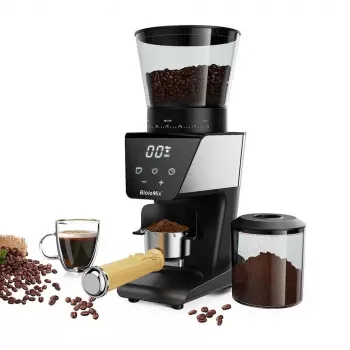
Available now: Automatic Conical Burr Coffee Grinder with 30 Settings and LCD Timer.
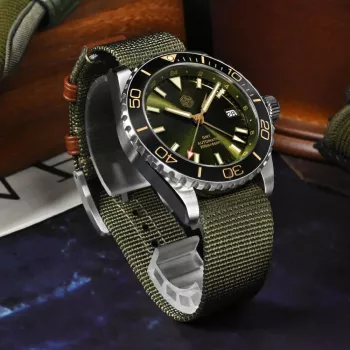
If you like to time steeping and extraction steps beyond the grinder’s timer, an everyday wrist timer can be handy during pour-over or AeroPress routines. One option currently in stock is the 39mm Diver GMT Enamel Dial Automatic Mechanical Watch with Ceramic Bezel.
FAQ
Can one grinder handle espresso and French press well?
Yes, as long as it has a wide grind range and stable adjustments. Use the fine settings for espresso and the coarse settings for French press, then dial in based on taste and brew timing.
Is a timer accurate enough for dosing coffee?
A timer is consistent, but it isn’t the same as weighing grounds. Bean density and roast level affect output, so use the timer for repeatability and confirm with a scale occasionally, especially when switching coffees.
How often should burrs be cleaned?
Light brushing weekly (or every few uses) and a deeper clean about monthly works well for many households. Clean more often if you use dark, oily roasts.







Leave a comment