Clamp-On Pallet Forks: Fit Checks, Setup, Safe Lifting
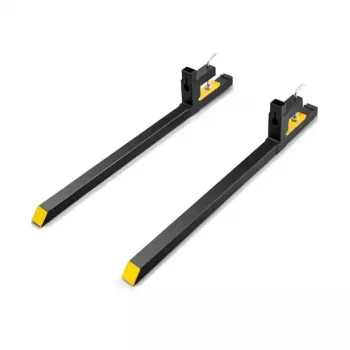
Clamp-On Pallet Forks for Tractor Loaders: Fit, Setup, and Safe Lifting
Clamp-on pallet forks turn a standard loader bucket into a versatile lifting tool for moving pallets, logs, lumber, and bulky materials. The right set depends on bucket fit, fork length, load handling, and how the extra leverage affects stability. Use the guidance below to match forks to a tractor loader, install them correctly, and lift safely without damaging the bucket or overloading the machine.
What Clamp-On Pallet Forks Do Best
- Convert a loader bucket into a fork-style lifter without swapping to a dedicated quick-attach fork frame.
- Handle common farm and property tasks: moving palletized feed, stacking lumber, carrying brush piles, positioning implements, and loading trailers.
- Offer quick installation and removal when switching between scooping and lifting tasks.
- Work well for occasional to moderate fork use where cost and convenience matter more than maximum capacity and visibility.
Key Fit Checks Before Buying
Clamp-on forks only work as well as the bucket interface. A few minutes with a tape measure can prevent slipping, dented cutting edges, and frustrating “almost fits” installs.
- Bucket lip thickness: clamp mechanisms must open wide enough to seat fully on the cutting edge without bottoming out.
- Bucket top edge shape: heavily rounded, reinforced, or irregular lips may reduce clamp grip or cause shifting.
- Bucket width: forks should be able to slide to a practical spacing for pallets and odd loads while staying within the bucket’s usable span.
- Fork length: longer forks increase reach but also amplify leverage on the bucket and reduce effective lift capacity.
- Loader and tractor limits: the loader’s rated lift capacity and the tractor’s stability are the real ceilings, not just the fork rating.
Fork Length and Leverage: Why 60 Inches Changes Handling
Long forks are handy—until the load center creeps forward. A 60-inch fork can make lumber bundles and longer pallets easier to support, but it also changes how your loader “feels” under load.
- Longer forks can support deeper loads (long pallets, lumber bundles, logs) and reduce the chance of tipping a load forward.
- A longer load center reduces effective lift capacity; heavier items at the tips can overload the loader even when the same weight is safe closer to the bucket.
- Expect more rear ballast needs as fork length increases; stability becomes the limiting factor sooner.
- For best control, keep loads as close to the bucket as practical, carry low, and avoid sudden turns on slopes.
Clamp-On vs Quick-Attach Forks: Practical Differences
If you only need forks now and then, clamp-ons are a flexible add-on. If you move heavy pallets every day, a quick-attach fork frame usually pays off in control, visibility, and reduced bucket stress.
Common Fork Options for Tractor Loaders
| Option | Best For | Tradeoffs | Notes |
|---|---|---|---|
| Clamp-on pallet forks | Occasional lifting, property maintenance, light-to-moderate pallet handling | Reduced visibility and capacity vs dedicated frames; bucket lip stress | Add a stabilizer bar if possible; tighten evenly |
| Quick-attach fork frame | Frequent pallet work, heavier loads, improved control | Higher cost; requires compatible quick-attach interface | Typically better load positioning and stability |
| Pallet fork sleeves (over existing forks) | Extending reach on existing forks | Added leverage reduces capacity; may be bulky | Useful when occasional longer support is needed |
- Clamp-on forks are faster to add to an existing bucket and typically cost less upfront.
- Quick-attach fork frames generally offer higher stability, better visibility, and higher real-world capacity because the load is closer to the loader pins.
- Clamp-on forks place stress on the bucket cutting edge; using a stabilizer bar and proper tightening reduces twisting and denting.
- If fork work is frequent (daily handling of heavy pallets), a dedicated fork frame is often the better long-term choice.
Installation Steps That Prevent Slipping and Bucket Damage
A careful install is the difference between “solid and predictable” and “creaks and drifts.” Take the time to seat the clamps fully and keep both forks aligned.
Safe Lifting and Handling
For additional safety references, review OSHA guidance on powered industrial truck safety and NIOSH agricultural safety resources for broader best practices around load handling, stability, and worksite hazards.
Care, Storage, and Troubleshooting
Product Options In Stock
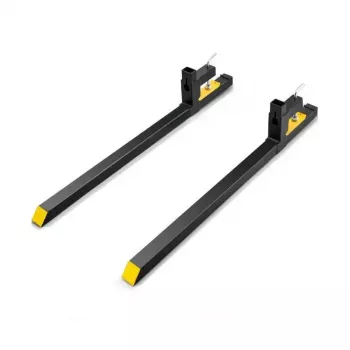
60″ Clamp-On Pallet Forks for Tractors & Loaders
More In-Stock Items
- 39mm Diver GMT Enamel Dial Automatic Mechanical Watch with Ceramic Bezel
- Vintage Leather Crossbody Shell Bag
FAQ
Will clamp-on pallet forks fit any tractor bucket?
Not always. Fit depends on the bucket lip thickness and shape, the clamp’s opening range, and having a clean, solid cutting edge to bite onto. Measure your bucket lip and avoid mounting on heavily worn, bent, or oddly reinforced edges that prevent full clamp seating.
How much weight can clamp-on forks lift safely?
The practical limit is usually your loader’s rated capacity at the specified load center, plus tractor stability with proper rear ballast. Longer forks reduce effective capacity, and loads carried near the tips are the most likely to overload the loader or cause a forward tip.
Do clamp-on forks damage the bucket?
They can if the clamps aren’t fully seated, if tightening is uneven, or if the load is too heavy or carried too far forward. Reduce risk by seating clamps completely, tightening evenly, using a stabilizer bar when possible, keeping loads close to the bucket face, and avoiding prying or shock-loading.








Leave a comment