Gold-Plated Dual-Cavity Dynamic IEMs for Daily HiFi
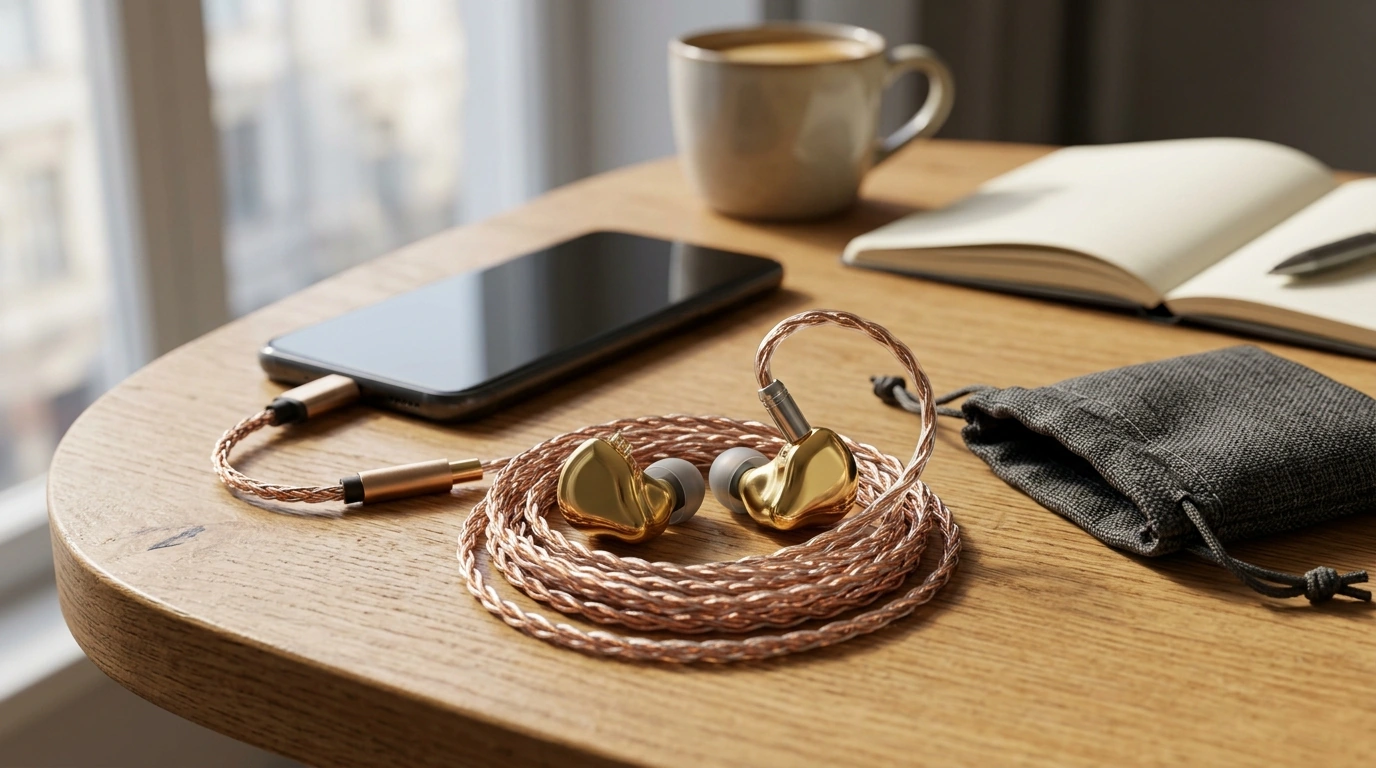
Gold-Plated Dual-Cavity HiFi IEMs with Dynamic Drivers and Copper Cable
A dual-cavity in-ear design paired with dynamic drivers can deliver impactful bass, clean mids, and smooth treble in a compact form. Add a copper cable for reliable signal transfer and durability, and the result is an everyday HiFi option suited to commuting, desk listening, and casual monitoring—without the bulk of over-ear headphones.
What Makes a Dual-Cavity IEM Design Different
Dual-cavity housings are built to shape how air moves inside the shell and around the driver. In practical terms, that acoustic control can help reduce unwanted pressure build-up in the ear canal, which some listeners notice as “stuffiness” during long sessions.
By better managing internal reflections and resonance, a well-tuned chamber can also improve perceived clarity and separation—especially in bass-forward music where muddiness can creep in. The goal isn’t “more bass at all costs,” but bass that reaches deep while staying contained enough to keep vocals and instruments from getting masked.
Even with thoughtful acoustic design, the fit and seal still dominate the final sound. The best dual-cavity tuning won’t fully translate if eartips don’t seal consistently or if the IEM sits at a slightly different angle each time.
Dynamic Drivers: Natural Tone, Punch, and Cohesion
Dynamic drivers remain a favorite for everyday listening because they can sound cohesive and natural. In many common tunings, much (or all) of the frequency range comes from a single diaphragm, which can make imaging feel unified—like the music is coming from one “source” rather than stitched together.
Bass is where dynamic drivers often stand out. With a good seal, the low end tends to feel physical and rounded, which pairs well with pop, hip-hop, EDM, and cinematic soundtracks. Treble can also be tuned for smoothness, helping reduce fatigue during long playlists compared with overly sharp peaks.
Dynamic driver strengths in daily listening
| Listening priority | What to expect | Who benefits most |
|---|---|---|
| Bass punch | Stronger slam and sub-bass weight with a good seal | Commuters, gym use, modern genres |
| Tonality | Consistent, unified character across frequencies | General-purpose HiFi listeners |
| Comfort over time | Often smoother treble when tuned for long sessions | Office/desk listening, long playlists |
| Efficiency | Commonly easy to drive from phones and dongles | Casual use without an amp |
Gold-Plated Shell and Copper Cable: Practical Benefits
A plated finish isn’t only about looks. A gold-plated shell can improve resistance to tarnish and surface wear, helping the housings keep their appearance through everyday handling, pocket storage, and frequent insertion/removal.
The copper cable is a practical choice for daily use: flexible, durable, and generally dependable under repeated bending. That matters because many “audio issues” in the real world are actually cable issues—intermittent contact near the plug, strain at the splitter, or wear at the earpiece connectors.
For longevity, prioritize good habits: use the plug housing (not the cable) when unplugging, store the cable in a loose coil, and avoid tight wraps around a phone or dongle that can stress internal conductors.
Comfort, Fit, and Isolation
A secure seal does more than boost bass. It stabilizes the entire presentation—bass becomes consistent, the soundstage feels more anchored, and outside noise drops. Better isolation can also reduce the temptation to raise volume in loud spaces, which is important for hearing health. For safe listening guidance, see the CDC/NIOSH overview of occupational noise exposure and recommended limits at https://www.cdc.gov/niosh/topics/noise/.
Quick fit checklist
| Step | What to do | What you should notice |
|---|---|---|
| Choose tips | Try at least two sizes | Bass becomes fuller without needing more volume |
| Insert & rotate | Seat the nozzle and gently twist | Better isolation, less “hollow” sound |
| Cable position | Route over ear if possible | Less cable thump when walking |
| Seal test | Play a bass track at low volume | Consistent bass in both ears |
Where These IEMs Shine (Genres and Use Cases)
Setup Tips: Getting the Best Sound from a Phone or DAC
If using a phone without a headphone jack, a simple USB-C or Lightning DAC dongle can provide more stable output and help reduce background hiss. Source quality matters too: higher-bitrate or lossless audio can sound cleaner once isolation improves and details are easier to notice. For a straightforward explanation of compression basics, see https://www.britannica.com/technology/audio-data-compression.
In-Stock Picks to Compare
- Gold-Plated Dual-Cavity HiFi IEMs with Dynamic Drivers and Copper Cable — a compact HiFi option designed for daily listening and commuting.
- Vintage Leather Crossbody Shell Bag — a convenient way to carry small essentials like a phone, dongle DAC, and eartip case while keeping pockets light.
- 39mm Diver GMT Enamel Dial Automatic Mechanical Watch with Ceramic Bezel — a durable accessory for travel days when you’re already on the move with a portable audio setup.
At-a-Glance Product Summary
Quick specs snapshot
| Item | Detail |
|---|---|
| Product | Gold-Plated Dual-Cavity HiFi IEMs with Dynamic Drivers and Copper Cable |
| Price | 61.51 USD |
| Availability | In stock |
| Product page | View product |
FAQ
Do dual-cavity IEMs reduce ear pressure compared with sealed designs?
They can, because venting and chamber tuning may reduce pressure sensation for some listeners. Results vary with fit and eartips, and a very tight seal can still feel “plugged” even when the shell is vented.
Will a copper cable change the sound noticeably?
Most perceived changes are usually small compared with tip choice, seal quality, and the source device. Copper cables are typically chosen for flexibility, durability, and reliable connections rather than dramatic tonal shifts.
Are dynamic-driver IEMs easy to drive from a phone?
Many dynamic-driver IEMs are efficient enough for phones and basic dongles. A quality dongle DAC can still improve volume headroom and reduce noise, and it’s smart to start at low volume because isolation can make audio feel louder than expected.










Leave a comment