3500N Pneumatic Strapping Tool for PET: Fast Auto Banding
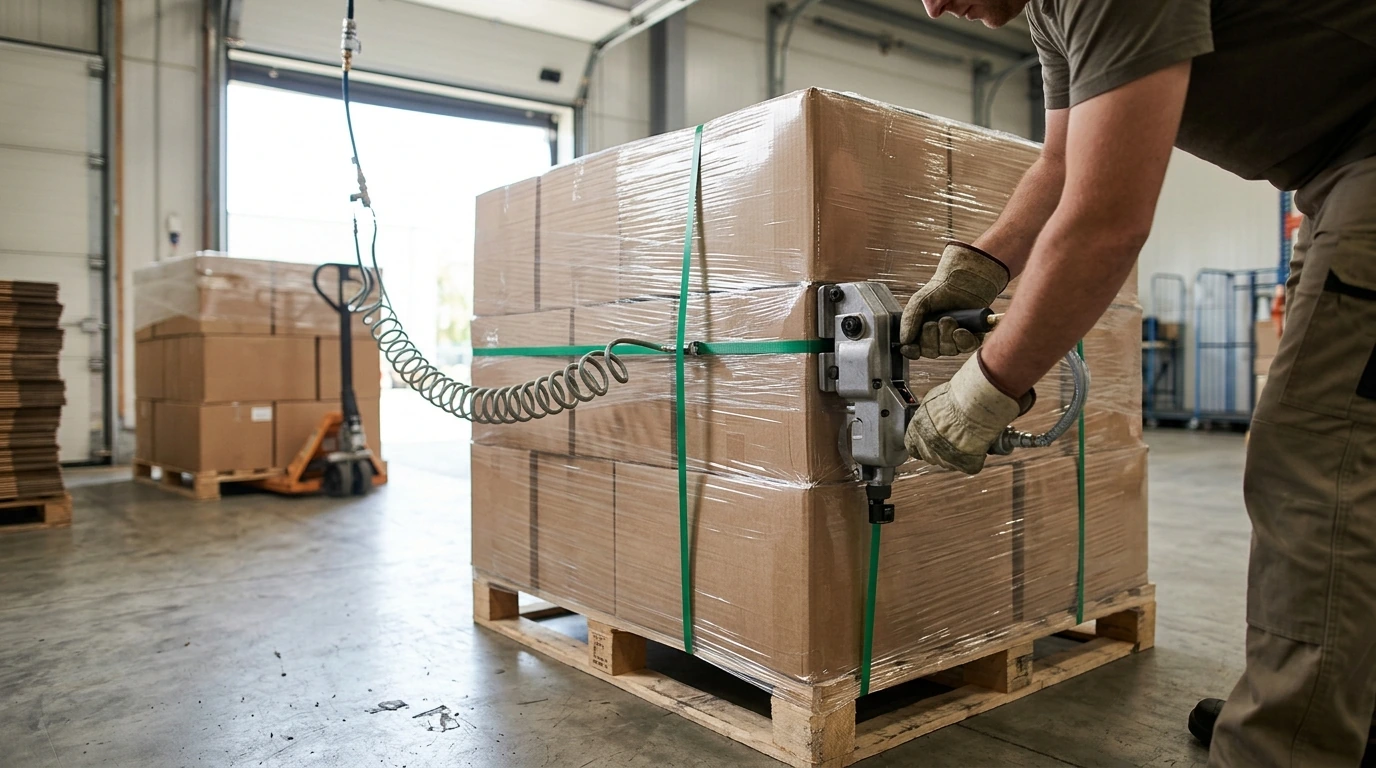
Pneumatic Strapping Tool 3500N – Automatic Banding for PET Plastic Belt
Consistent, high-tension strapping is essential for stable pallets and safe handling in warehouses, factories, and shipping bays. A pneumatic strapping tool automates tensioning and sealing for PET plastic belt, helping reduce operator fatigue, improve strap consistency, and speed up load securing for medium to heavy-duty applications. When loads face repeated touches—forklift moves, staging, trailer vibration, and final delivery—a dependable tension-and-weld cycle can make a noticeable difference in both damage reduction and day-to-day packing efficiency.
What a pneumatic PET strapping tool does
A pneumatic PET strapping tool uses compressed air to power the key steps of banding so operators don’t have to rely on repeated manual pulling or ratcheting. It’s built for PET (polyester) strapping—one of the most common choices for palletized loads because it holds tension well and is easier to handle than steel in many settings.
- Uses compressed air to drive tensioning and sealing cycles with less manual effort than fully manual tools
- Designed for PET plastic strap (polyester), commonly used for palletized loads and industrial packaging
- Automatic banding workflow typically combines tensioning + friction-weld sealing + cutting (tool-dependent) to minimize steps
- Supports repeatable strap results, useful when multiple operators strap similar loads across shifts
Friction-weld sealing is especially practical for high-volume packing floors: it removes the need for metal seals, reduces consumable costs, and can help avoid sharp edges that can snag gloves, stretch wrap, or product packaging.
Key advantages for warehouses and shipping lines
For operations that strap multiple pallets per day, the biggest gains usually come from speed, uniformity, and reduced rework. A pneumatic tool can help standardize results across operators, which is hard to achieve when tension depends on individual strength and technique.
- Higher throughput: faster cycle time than manual tensioners for repetitive strapping tasks
- More uniform strap tension: helps reduce load shifting caused by under-tensioned straps
- Reduced fatigue: pneumatic power lowers the physical strain of tightening straps repeatedly
- Cleaner operations: friction-weld sealing avoids metal seals, reducing consumables and potential sharp edges
- Better load presentation: consistent strap placement and tension improves package stability and handling confidence
To support safer materials handling practices across the dock and warehouse, it’s also worth aligning strapping procedures with established workplace guidance such as OSHA’s materials handling and storage requirements. For distribution environments that validate packaging performance through testing, overviews like the ISTA transit testing standards can help teams understand why consistent unit-load containment matters.
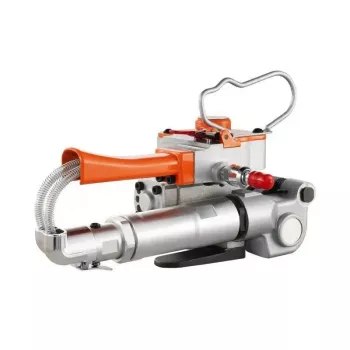
Spotlight: Pneumatic Strapping Tool 3500N (automatic banding tool for PET belt)
If your strapping station needs strong, repeatable tightening for PET strap, the Pneumatic Strapping Tool 3500N – Automatic Banding Tool for PET Plastic Belt is built around a high-tension workflow suitable for many palletized shipments and industrial packages. In a 3500N class tool, the goal is simple: deliver consistent tightening and a reliable friction weld so the strap stays put through handling and transport.
- High-tension capability (3500N class) suited to many palletized loads where strong, consistent tightening is required
- Automatic banding style operation supports streamlined tension–seal cycles for PET strapping workflows
- Best fit for shipping departments, logistics hubs, manufacturing lines, and any operation strapping multiple loads per day
- Stock availability supports faster deployment for expanding or replacing strapping stations
- Pair with the correct PET strap width/thickness range and an appropriate air supply for best results
At-a-glance product details
| Item | Details |
|---|---|
| Product | Pneumatic Strapping Tool 3500N – Automatic Banding Tool for PET Plastic Belt |
| Price | 267.51 USD |
| Availability | In stock |
| Typical use | Pallet and package strapping with PET plastic strap |
| Power source | Compressed air (pneumatic) |
Compatibility checklist before ordering
Before committing to a pneumatic strapping tool, confirm the basics at the strap, air, and workload level. Most “mystery issues” on day one come from a mismatch in strap specs or an unstable air supply.
- Strap material: confirm PET strap (polyester) rather than PP or steel, unless the tool explicitly supports them
- Strap dimensions: verify supported strap width and thickness range for the tool model
- Air supply: ensure the facility compressor can maintain required pressure and airflow at the workstation
- Duty cycle: match the tool to daily strapping volume (occasional shipping vs. continuous line work)
- Load type: irregular loads may need corner protectors and consistent strap placement practices
Setup essentials for reliable sealing and tension
Once the tool arrives, a short setup routine helps prevent weak welds, strap tracking problems, and premature wear. Many teams standardize a “first 10 straps” check so the station is dialed in before peak shipping.
Safety and good practice on the packing floor
Maintenance routine to extend tool life
In-stock picks
- Pneumatic Strapping Tool 3500N – Automatic Banding Tool for PET Plastic Belt
- Vintage Leather Crossbody Shell Bag
FAQ
Can a pneumatic strapping tool be used with PET strap for pallet loads?
Yes—when the tool is designed for PET (polyester) strapping and the strap width/thickness matches the supported range. Confirm the workstation air supply is stable and run a quick weld check on the actual pallet load before full production.
What air pressure is needed for a pneumatic strapping tool?
It depends on the model and site setup. Use the tool’s specifications as the source of truth and make sure the compressor can maintain steady pressure and airflow at the station, since unstable air can cause uneven tensioning or weak welds.
Why is the weld or seal failing on PET strapping?
Common causes include incorrect strap size, dirty friction surfaces, insufficient air pressure, poor tool alignment on the strap, or worn wear parts. Clean the tool, verify air and tension settings, and inspect/replace wear components to restore consistent sealing.








Leave a comment